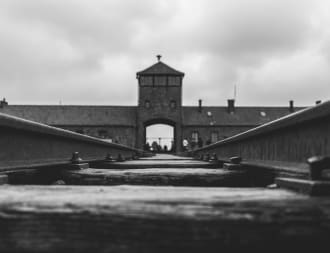
Pay respects at the largest Nazi concentration camp memorial
Visit the Warsaw Uprising Museum in Poland, dedicated to the 1944 Warsaw Uprising against Nazi occupation, featuring historical exhibits and artifacts
Explore D-Day landing sites and WWII memorials
The Omaha Beach landing that changed how war is filmed.
Waikiki beach, the Pearl Harbor memorial and the Diamond Head crater hike.
Visit Dunkirk (Dunkerque), a historic port city in northern France. Explore the Musee Dunkerque 1940 (Operation Dynamo museum in a former bunker, telling the story of the 1940 evacuation of 338,000 Allied soldiers), see the 58-metre Leughenaer tower (the city's oldest building, a 15th-century belfry), stroll the wide sandy beach that stretches for 15 km along the North Sea, and admire the contemporary FRAC Grand Large art gallery (designed by Lacaton & Vassal, with a rooftop terrace). Sample local seafood and the carnival traditions that draw crowds each winter.
Takahata's devastating story of two children in the last months of the war.
Play Wolfenstein: Enemy Territory, a classic multiplayer first-person shooter game set in World War II.
Visit Westerplatte, the site of the first battle of World War II in Poland, known for its historical significance and monuments.
Easy Company from Normandy to Berchtesgaden; Spielberg and Hanks' ten-part war.
A burned man in a Tuscan villa remembers a desert affair before the war.
A Jewish cinema owner and a squad of commandos rewrite the end of the war.
Three timelines converge on the beach evacuation of 1940, almost without dialogue.
Spiegelman's father in Auschwitz, Jews as mice and Nazis as cats; the only comic with a Pulitzer.
A boy in Hiroshima on 6 August 1945, drawn by a survivor; the manga on the bomb.
The Peace Park and the hypocentre, plus Dejima, the island where Japan traded with the world for 200 years.
Town beneath an active volcano.
The canal house where Anne Frank hid for two years and wrote her diary, with the original bookcase door.
The Allied advance from Normandy to the Elbe, assembled by Carol Reed and Garson Kanin from a thousand cameramen.
Australian newsreel from the Kokoda Track in New Guinea, shot by Damien Parer, who was killed two years later.
The displaced-persons camps between 1945 and 1948, and the founding of Israel seen from inside them.
A year aboard an American aircraft carrier in the Pacific, filmed in colour by the crew themselves.
The British account of El Alamein, cut from footage shot by cameramen who went forward with the infantry.
The Soviet account of the counter-offensive that stopped the Wehrmacht outside Moscow, re-cut for American cinemas.
The people who knew her and hid her, including Miep Gies, filmed while they were still alive to speak.
Five Hungarian Jews return to the places they were deported from in 1944; Spielberg’s Shoah Foundation.
The Simon Wiesenthal Center’s Holocaust documentary, narrated by Orson Welles and Elizabeth Taylor.
The first of Frank Capra’s Why We Fight films, made to explain to conscripts what they were being sent into.
Hitler told through Goethe’s Reynard the Fox, in woodcuts and archive, narrated by Marlene Dietrich.
John Ford filmed the battle from the roof of a power station and was wounded doing it; eighteen minutes of 16mm colour.
Infobox