Read the Old Testament, the first major division of the Christian Bible and a foundational text in Judaism, comprising books like Genesis, Exodus, and Psalms.
Read the New Testament, the second part of the Christian Bible covering the life and teachings of Jesus Christ and the early church.
Scarlett O'Hara, the burning of Atlanta and the biggest box office in inflation-adjusted history.
Watch Spartacus, the 1960 epic historical drama directed by Stanley Kubrick (the film is often incorrectly attributed to David Lynch; it stars Kirk Douglas as the Thracian gladiator who leads a slave revolt against the Roman Republic). The film is famous for its massive battle scenes, the iconic 'I am Spartacus' sequence, and a screenplay by Dalton Trumbo (a blacklisted writer who received credit, helping break the Hollywood blacklist).
Rome added to the 1997 original, with four campaigns and the units that fixed its worst balance.
A Kentucky coal strike in 1973, filmed from the picket line; Barbara Kopple's Oscar.
Lean's Russian Revolution romance, the ice palace and "Lara's Theme".
A noble family sold into slavery in medieval Japan; the saddest film Mizoguchi made.
The icon painter through medieval Russia, the Tatar raid and a boy casting a bell.
Bertolucci and Storaro's fascist Italy in tilted frames and autumn light.
Klaus Kinski leads conquistadors down the Amazon into madness; the raft of monkeys.
The Algerian uprising filmed like a newsreel; the Pentagon screened it in 2003.
Burt Lancaster as a Sicilian prince watching his world end, and Visconti's hour-long ball.
Dreyer's trial in close-up, with a performance from Renee Falconetti that has never been matched.
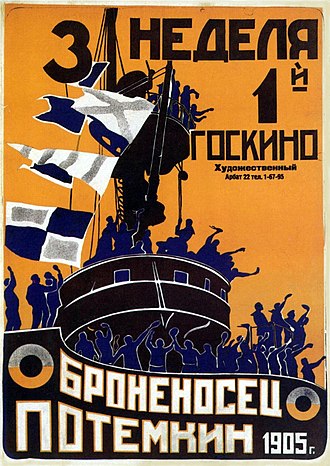
The Odessa Steps sequence, the pram, and the montage theory every editor still learns.
Thomas More refuses to bless Henry VIII's divorce and pays with his head.
Eleven Oscars, a nine-minute chariot race and a galley slave who becomes a prince.
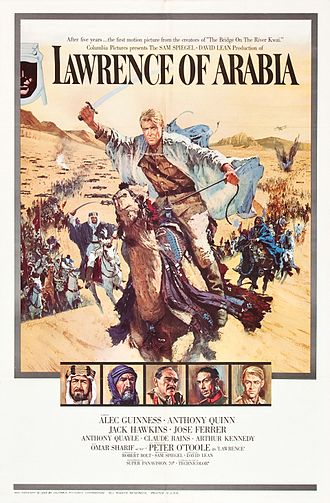
Peter O'Toole crosses the Nefud in 70mm; the desert epic every other desert epic quotes.
An actor sells his conscience to the Nazis for the stage; Klaus Maria Brandauer's great performance.
The seven-hour Soviet Tolstoy, with the Red Army as extras at Borodino.
Thirty years of a London family, from the Boer War to the Jazz Age, from Noel Coward's play.
The novelist takes on the Dreyfus affair; the first biopic to win.
Clark Gable leads the mutiny against Charles Laughton's Captain Bligh.
A village of indomitable Gauls, a magic potion and Romans to thump; the first of thirty-nine.
John Hersey follows six survivors through the day of the bomb; the New Yorker gave it a whole issue.
Steven Levy on the MIT hackers, the homebrew club and the game makers who built the culture.
Dee Brown's history of the American West from the Native side, 1860 to 1890.
Gombrich from cave paintings to the present; the art history book with no jargon, eight million copies.
Vasari on Giotto, Leonardo and Michelangelo; art history begins in 1550.
Shirer, who was there, on Germany from 1933 to 1945 in 1,200 pages.
Infobox