Read the Analects of Confucius, a collection of sayings and ideas attributed to the Chinese philosopher Confucius
Read the Quran, the central religious text of Islam, to understand its teachings and significance.
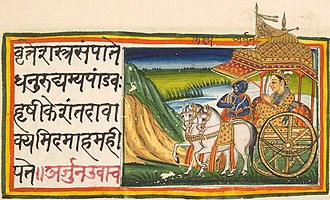
Read the Bhagavad Gita, a 700-verse Hindu scripture that is part of the Mahabharata epic
Read the Upanishads, ancient Sanskrit texts that form the philosophical foundation of Hinduism
Read the Tao Te Ching, an ancient Chinese text of Taoist philosophy
Eckhart Tolle on the present moment and the voice in your head.
Csikszentmihalyi on the state of total absorption and how to live in it.
Sun Tzu's thirteen chapters on winning without fighting, quoted in every boardroom.
A city whose happiness depends on one child kept in a cellar, and the few citizens who leave rather than accept the terms.
A universe of hexagonal galleries holding every possible 410-page book, nearly all of them gibberish.
A successful judge falls ill and works out, over three months of dying, that he lived the whole thing wrong.
Sogyal Rinpoche's Buddhist guide to death for Western readers.
John Berger on how oil painting and advertising teach us to look; the BBC series as a book.
A father and son ride from Minnesota to California while Pirsig asks what quality is.
Kuhn's paradigm shifts; the book that gave the phrase to everyone.
Hofstadter on self-reference in logic, art and music, and where minds come from; the Pulitzer nobody finishes.
Nietzsche on morality as the invention of the weak, in aphorisms.
Machiavelli's advice to a ruler: better to be feared than loved, if you cannot be both.
Socrates on justice, the philosopher-king and the cave; the book Western philosophy replies to.
Marcus Aurelius' private notes to himself on campaign; the Stoic handbook for emperors and CEOs.
Seneca writes to Lucilius on time, death and the cost of living well.
A botanist and Potawatomi woman on what plants teach about gratitude; the slow bestseller.
One is not born but becomes a woman; de Beauvoir's 1949 foundation of feminism.
Peter Thiel on monopolies, secrets and why competition is for losers.
What humans will want once famine, plague and war are solved; Harari's sequel.
The improbable events that run history and the experts who never see them; Taleb's contempt.
Atul Gawande on what medicine gets wrong about dying, and what a good end looks like.
Edward Said on how the West invented the East to rule it.
Adam Smith, the pin factory and the invisible hand; economics begins in 1776.
Aristotle on virtue as a habit and happiness as an activity; the golden mean.
Infobox