Gareth Evans and Iko Uwais in Jakarta: one tower block, then two years undercover and a kitchen.
Worms in real time and in two dimensions: two players, one keyboard, forty weapons and no turns at all.
The North Atlantic from the other side: a Templar hunting the assassins he used to work for.
A crashed colony ship on the alien Mira, an open world four times the size of the others, and mechs to cross it.
The handheld one built for playing next to other people, with a shared map and grottos traded on the street.
Five chapters, each following a different party member until they all meet in the last one.
The 1986 game that invented the Japanese role-playing game: one hero, one slime at a time.
The job system proper, twenty-three classes swapped at will, and the last of the trilogy that never left Japan for years.
No experience points - your stats grow from what you do - and the first game in the series with a real story.
The 1987 original that saved Square: four Light Warriors, a job you pick at the start and a time loop at the end.
The real Japanese Super Mario Bros. 2: the same engine, poison mushrooms and wind, and far harder.
The 1989 Game Boy launch platformer: twelve levels, two shoot-em-up stages and a princess who is not Peach.
The cel-shaded reboot with Elika beside you, in which you cannot die and the land is healed area by area.
Open zones for the first time, with a grind rail bolted to a hillside and titans to climb.
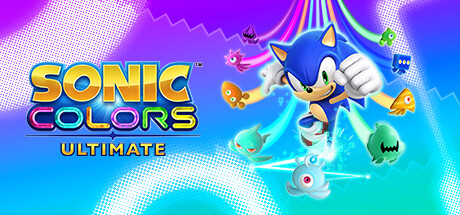
An alien amusement park in orbit and the Wisp powers; the game that pulled the series out of its worst decade.
Teams of three switched on the fly, speed, power and flight in one control scheme.
Two campaigns, the Chao garden, and City Escape - the last Sonic game Sega made for its own console.
Time travel through four versions of every zone, and two soundtracks depending on where you bought it.
The crew of the Unity land on Chiron and split into seven ideologies; the best writing in any strategy game.
The Alpha Centauri idea again: colonise an alien planet, then choose whether to stay human.
A book with something real hidden behind it - Kit Williams buried a golden hare and painted the directions into Masquerade; people are still digging for later ones.
Cover to cover, not the two you do on a train: a book of nonograms, sudoku, kakuro or logic grids, finished to the last page.
An escape room you can do at the kitchen table: riddles that unlock the next page, and an answer key you are not supposed to open. Journal 29 and the EXIT books are the usual way in.
Fricke's 42-minute IMAX debut: time-lapse from the Egyptian desert to Manhattan, scored by Michael Stearns, with no dialogue and no narration at all.
Benoit Blanc on a Greek island with a tech billionaire and five people who owe him everything.
A divorced father disguises himself as a Scottish housekeeper to see his children.
A magazine assistant survives a fashion editor who never raises her voice.
The capital Myanmar built from farmland in 2005 and moved to overnight: twenty-lane highways with almost nothing on them, and an Uppatasanti Pagoda one foot shorter than Shwedagon.
Reuben is cheated out of a casino, so the crew rigs its opening night to lose.
Benedict wants his money back, so the crew works Europe; the Night Fox and the laser corridor.
Infobox