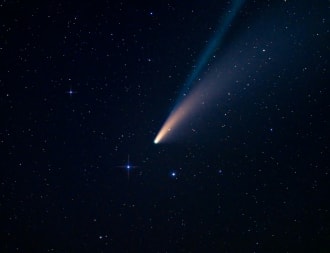
Watch a bright comet pass through the sky
Watch the Perseids (August) or Geminids (December) shooting stars from a dark location
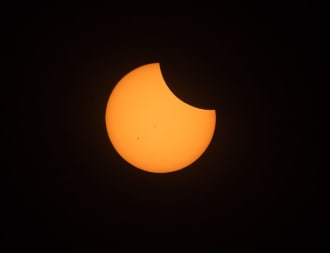
Experience darkness during a total solar eclipse
View our galaxy's core from dark sky locations like Chile's Atacama Desert or Hawaii's Mauna Kea
Watch the ring of fire during an annular eclipse
Experience the night sky in a zero light pollution zone, where stars and the Milky Way are clearly visible
Observe Saturn's ice and rock rings through a telescope
Witness the moon at its closest approach to Earth
Observe Jupiter's 400-year-old giant storm through a telescope
Observe two stars orbiting each other through a professional telescope
Observe the Starlink satellite train, a line of satellites launched by SpaceX visible from Earth shortly after deployment
Witness Halley's Comet, a periodic comet visible from Earth every 75-76 years, with the next appearance expected in 2061.
Witness a lunar eclipse, when the Earth passes directly between the Sun and the Moon, casting a deep red shadow on the lunar surface. Find a dark sky location away from city lights for the best view. The entire event lasts a few hours, with totality often lasting 30–60 minutes.
Watch massive solar flares through a specialized solar telescope
Observe the NEOWISE comet, a rare celestial event visible from Earth
Name a star through an official registry such as the International Star Registry or the Star Name Registry, where you can choose a star and receive a certificate with its coordinates. This symbolic gesture is a unique way to commemorate a special occasion or honor a loved one, and you can even view the star's location in the night sky using a star chart or app.
The clearest night skies on Earth, above the driest desert.
Infobox